
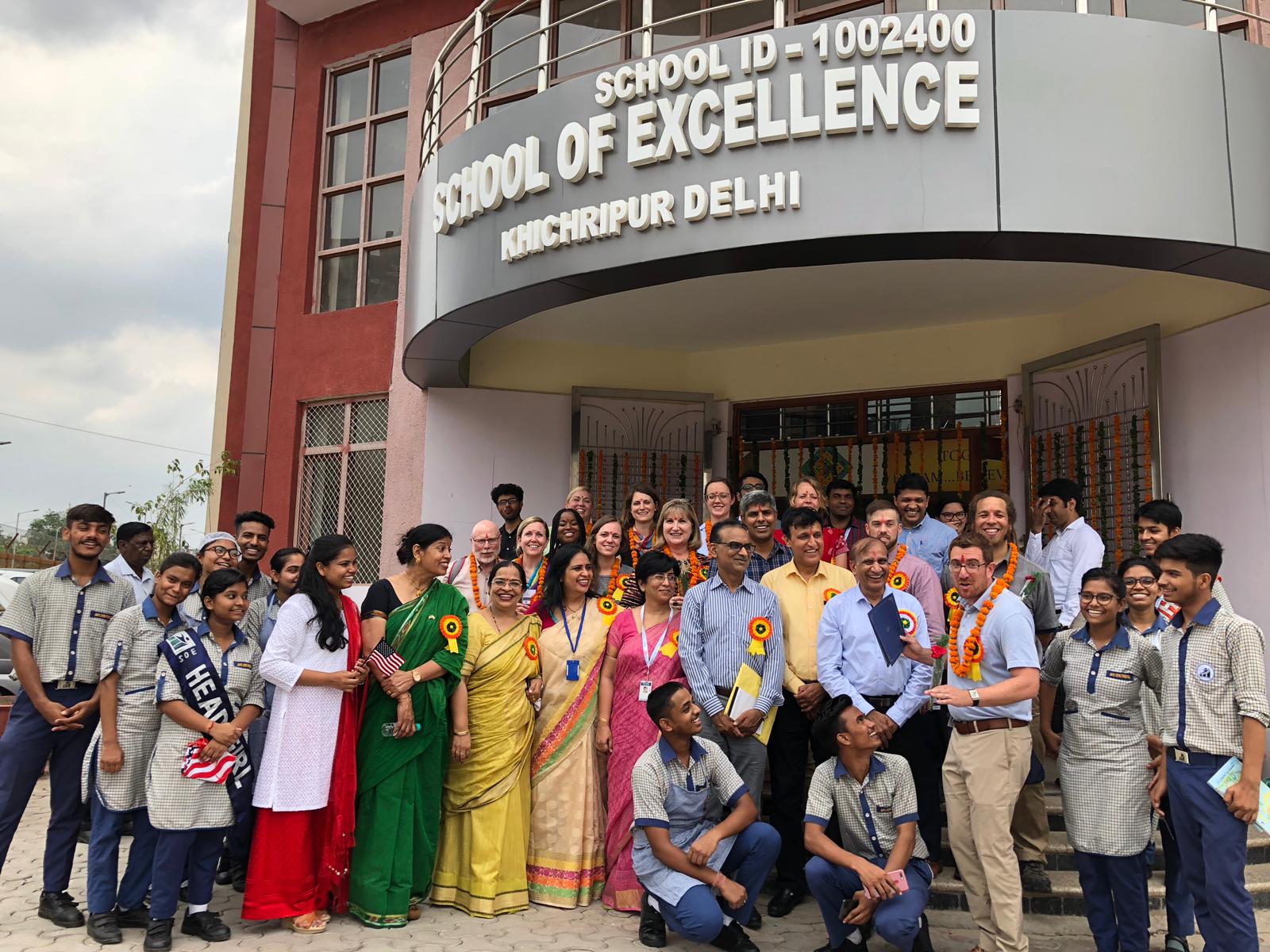
A warm welcome and farewell from the teachers, students, and administrators. (Photo: Peter) 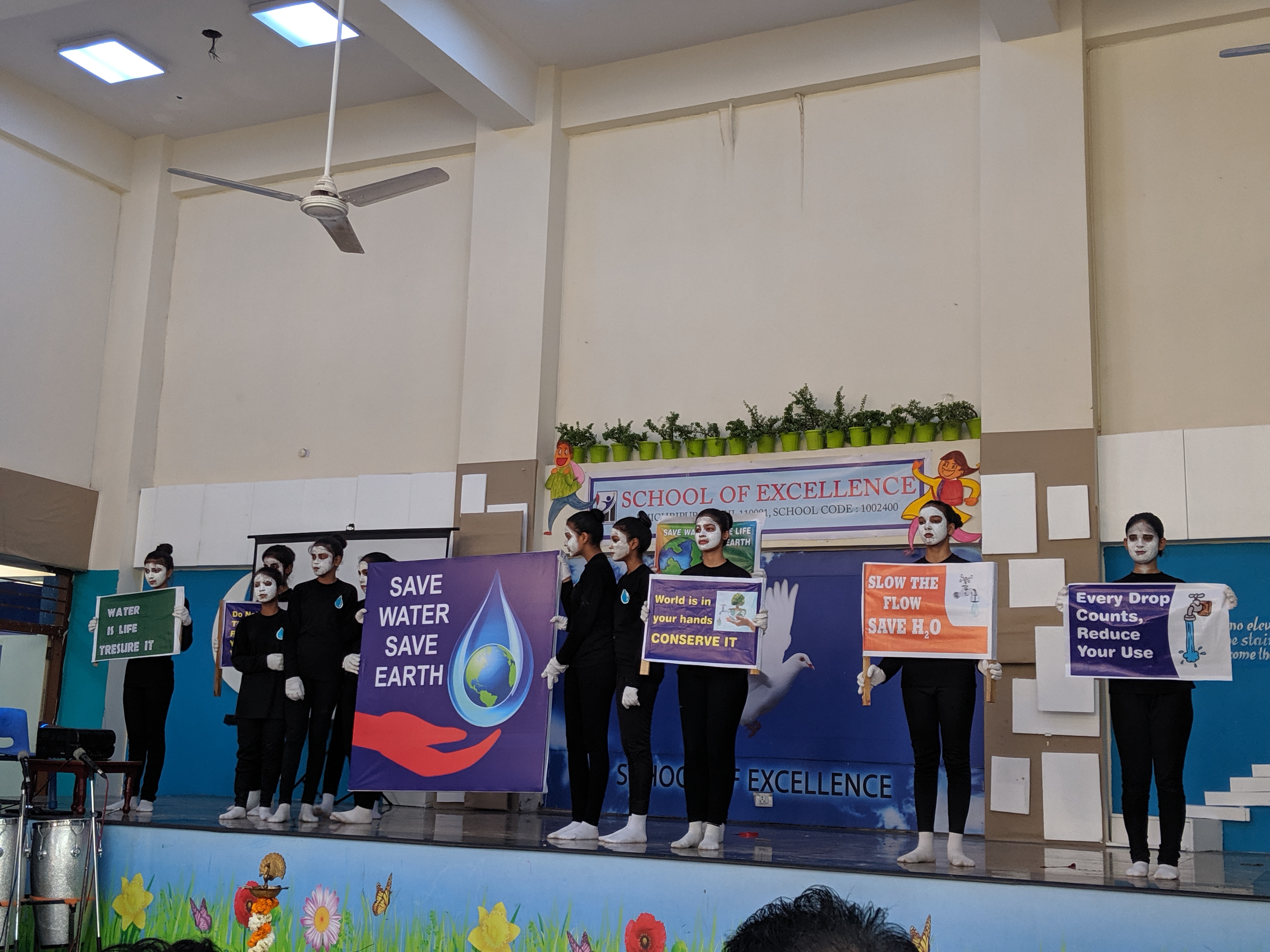
A mime presentation about water conservation. 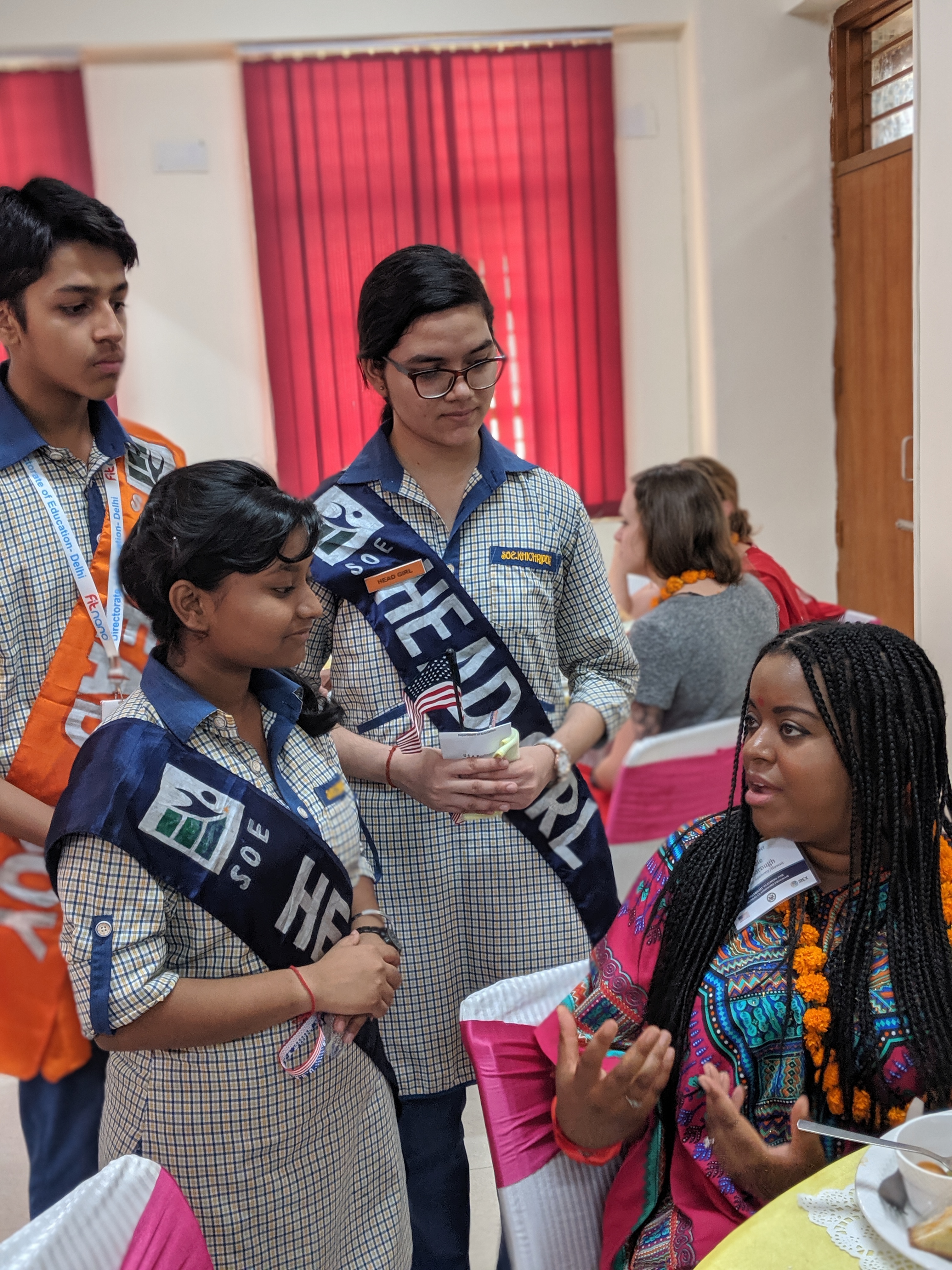
Davie, chatting with the school’s two head girls and head boy. 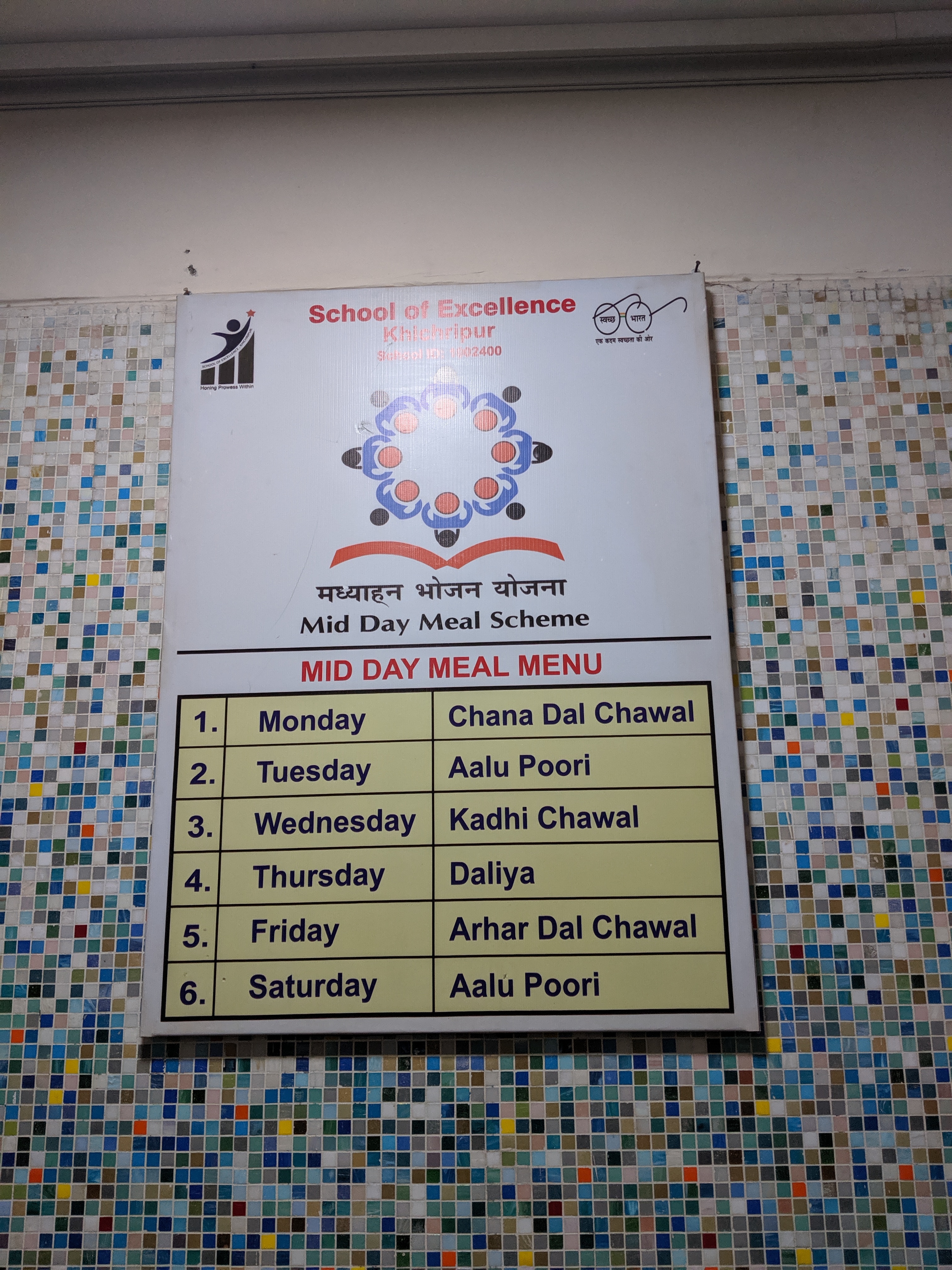
Lunch menu 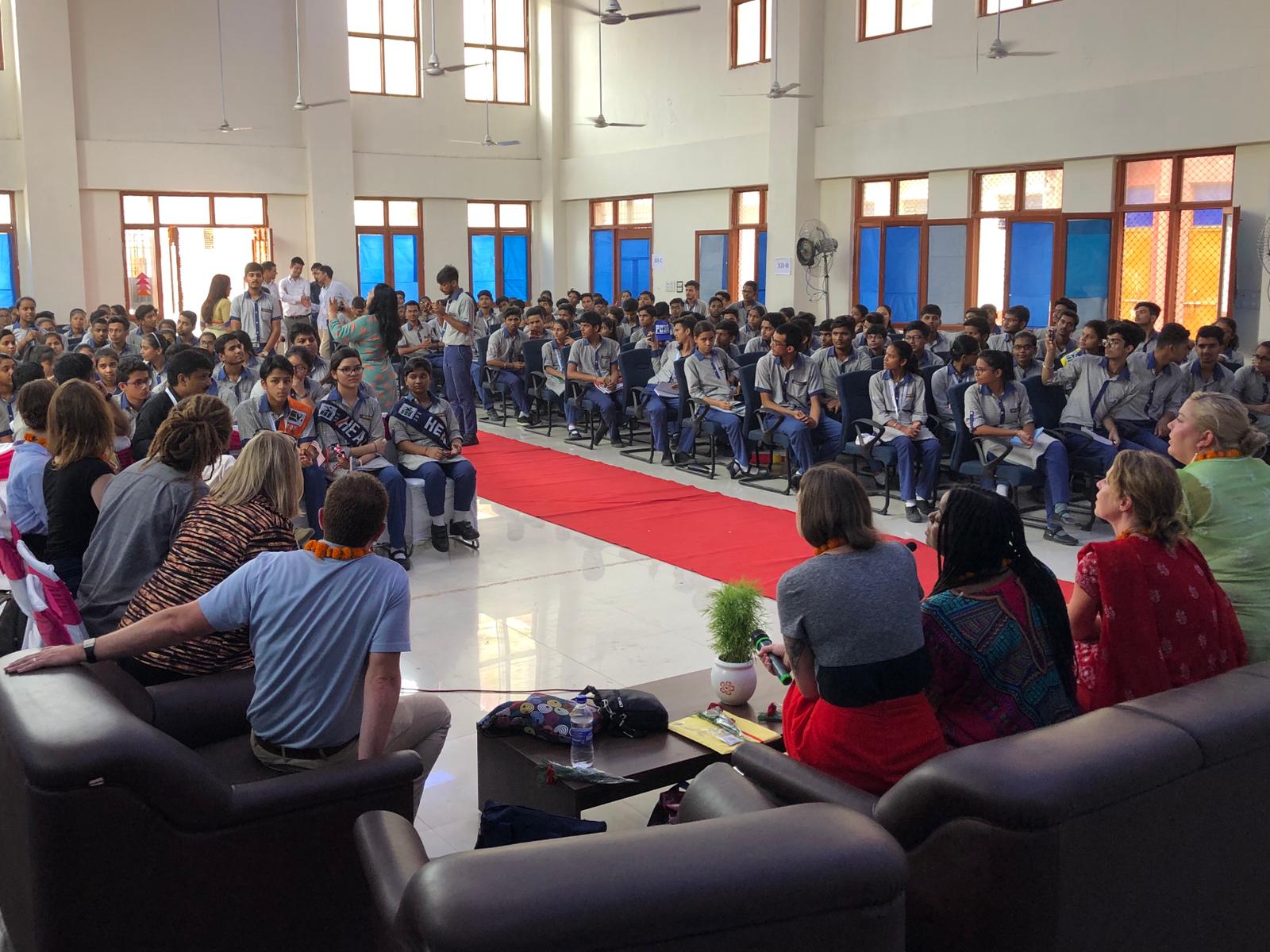
Q&A with the students. (Photo: Peter) 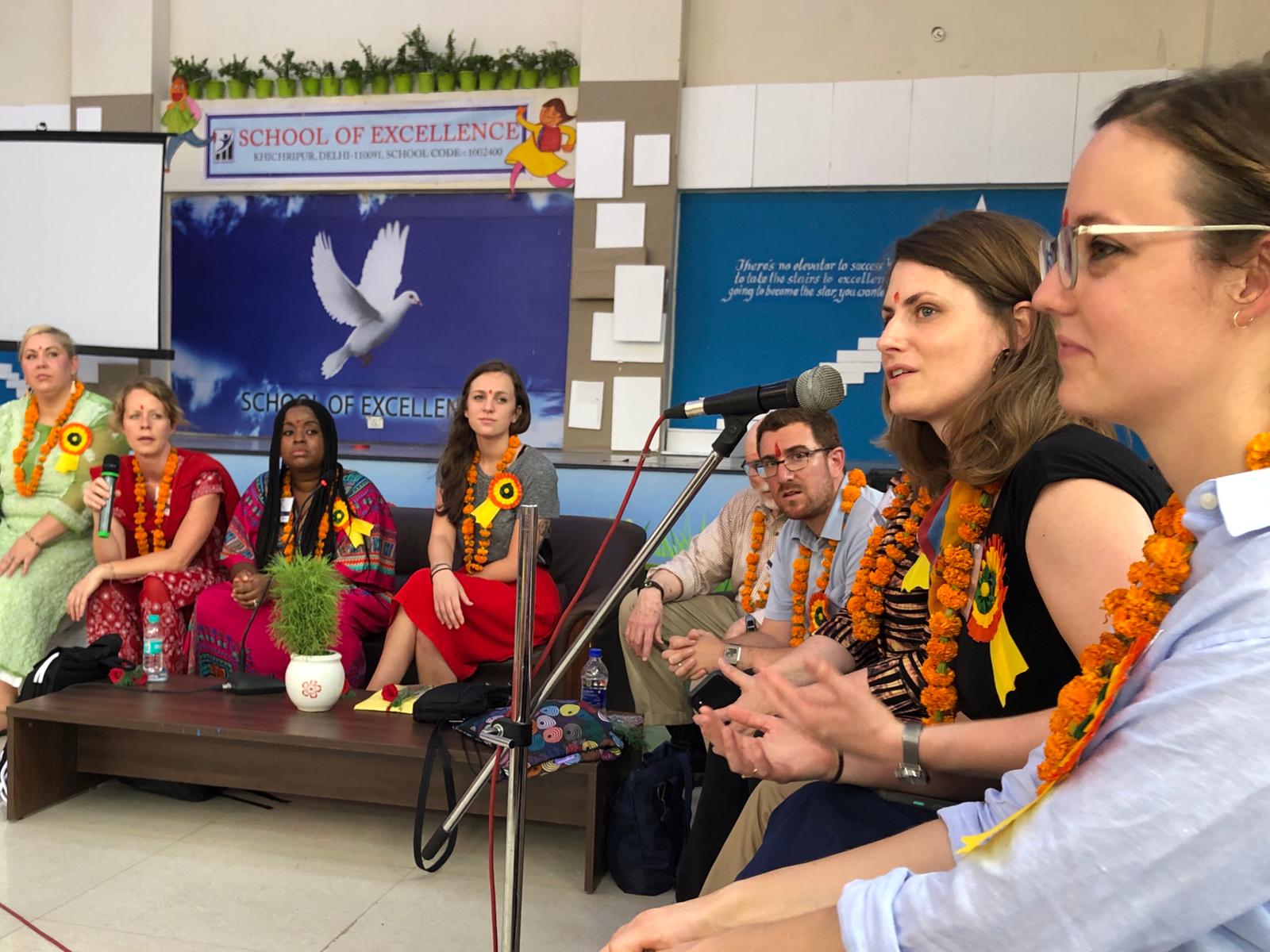
Me responding to a student Q, probably saying something incredibly profound. 😉 (Photo: Peter) 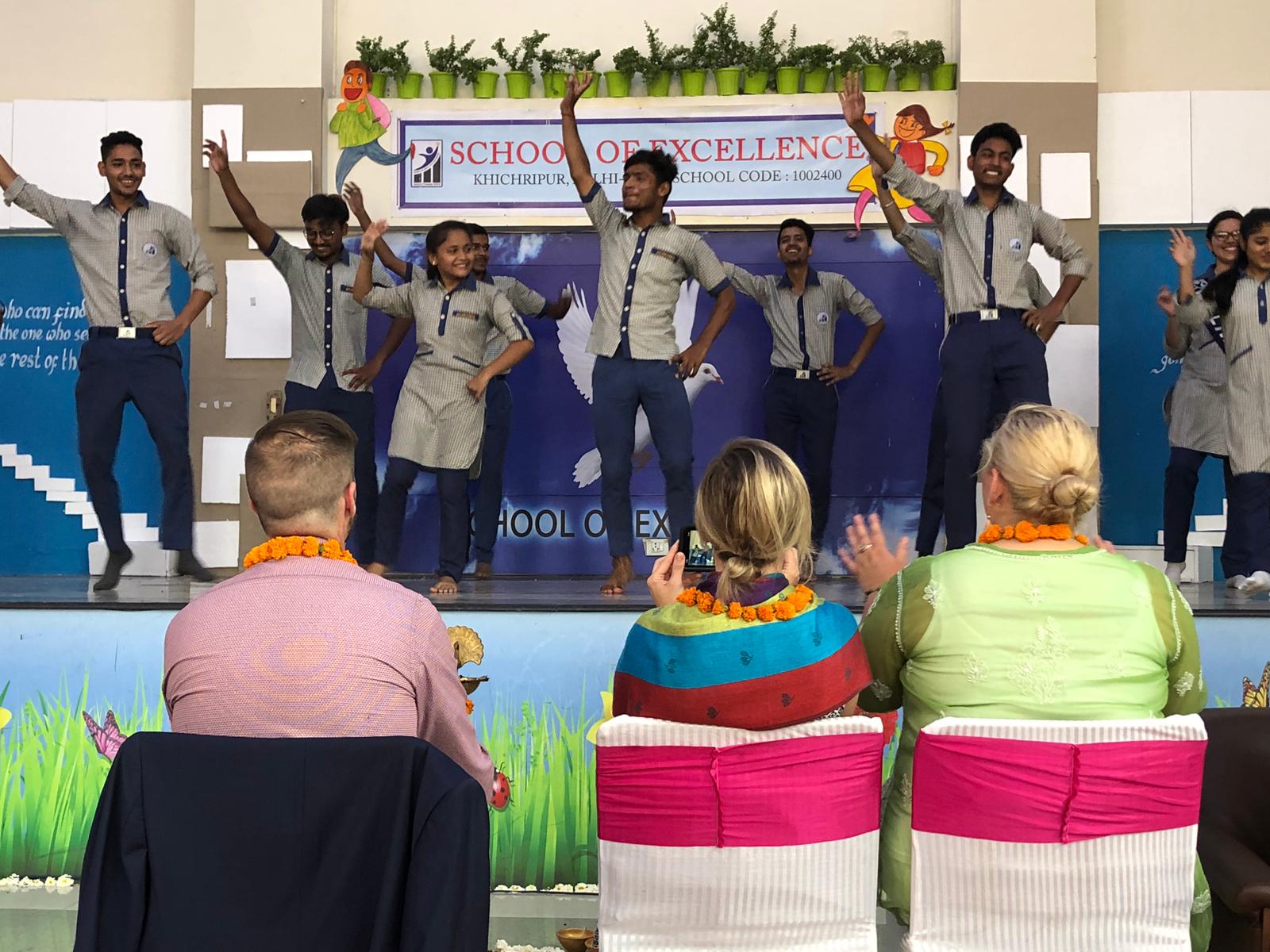
The high school kids performed some Punjabi pop dances… (Photo: Peter) 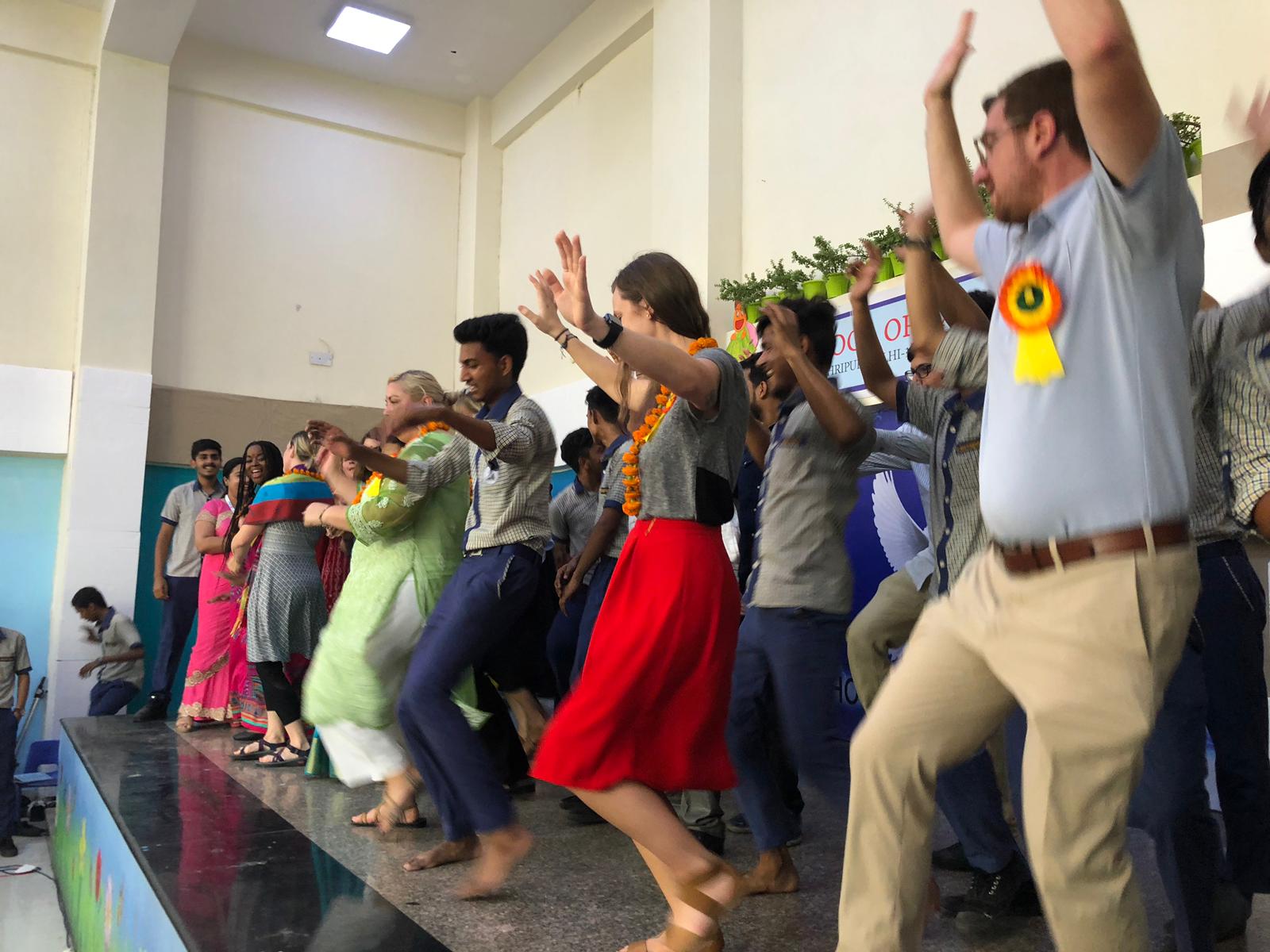
And then, naturally, we joined. (Photo: Peter)
Our first school visit of our trip took us to the Khichripur School of Excellence in Delhi, a government school (read: public school). There are five such schools in the city at this point, the brain child of wonderfully progressive education officials in Delhi, one of whom we met–Deputy Education Minister Mr. Manish Sisodia. These schools serve mostly low income students and each school draws on kids from nursery school – 12th grade living within 3km of the school. The students represent a diverse cross section of Indian society — linguistically, socio-economically, and religiously — and all students wear uniforms and have access to technology in their classrooms. What is most notable about this school is its embrace of the “Happiness Curriculum” — a curriculum piloted in 2018 in Delhi schools that emphasizes a more holistic set of educational values and mindsets beyond pure academics. In the U.S. this is similar to social-emotional education initiatives that are increasingly being rolled out in K-12 schools. At this school, for a 45 minute period each day, students from K-12 have a “happiness” period, which will look different depending on the age level. But for all students, the goal is to help to encourage physical and emotional well being. If our visit today was any indication of the program’s success, it is clearly going well! The students in their classes were engaged and attentive and eager to participate. Many of the students wanted to have one-on-one conversations with us and individually asked us really thoughtful questions about schooling in the U.S., our thoughts about their school, and what we will take away from the experience. Their poise and comfort with engaging with adults really impressed us. Beyond the personal interactions, the school put on an impressive assembly where students danced, sang, performed a really incisive pantomime about climate change and water conservation, and asked us really inquisitive questions in front of dozens of their peers and teachers. The questions revealed a lot about their perceptions of the U.S. — namely a very tough and powerful question about what we and our schools are doing about “gun culture” in the United States in light of school shootings. Clearly, they’re paying attention to the world beyond their own personal realities and are incredibly curious to know more about issues we face in our country. The visit also made a lot of us ponder questions around student engagement (How/why is it so high in this school and what can we do in our classrooms and schools to encourage this on a broader scale?), school pride (How can we motivate our schools/students to tap into what makes our schools special and important, especially since we believe that our schools share some of the same goals as their school? These kids are tremendously proud to attend a school that is pushing them to succeed in multiple forms regardless of social markers. CRLS pushes for this, too but isn’t successfully reaching all of its students. What can we learn from the leaders at this school?), and encouraging our students to be healthy and successful in body and in mind (Would adopting the language Delhi schools use help? How can we more effectively and systematically integrate the ideas that fuel the “Happiness Curriculum” in our schools?) I will visit many more classrooms and schools next week during my week in Pune and hope to explore these and other questions in more depth.
 Ms. Otty in India
Thank you, Dear Ra, for this wonderful entry about your school visit. We are about to leave to pick up Marcia and Ote. It is wonderful to hear from you before leaving. We will ponder your very rich day as we drive along. I suspect at this moment you are asleep, hopefully soundly. We Love You! Mom and Dad❤❤
On Thu, Jul 4, 2019 at 2:29 PM Ms. Otty in India wrote:
> reotty posted: ” A warm welcome and farewell from the teachers, students, > and administrators. (Photo: Peter)A mime presentation about water > conservation.Davie, chatting with the school’s two head girls and head > boy.Lunch menuQ&A with the students. (Photo: Peter)Me re” >
LikeLike
Hi Rachel, great pictures and post. A couple of questions given your comment about the diversity (social, religious, economic) of the students. What is the meaning/symbol of the neck wreath, what is the forehead marking and does it have meaning to only some of the students? And perhaps more critically, given the diversity do they also experience what we call bullying and self-imposed group segregation by the students?
Ken
LikeLike
Thanks for the Qs, Ken. The marigold garland is a symbol given at special occasions, including one where guests are being welcomed. We weren’t explicitly given an explanation, but in reading more about it seems to have spiritual significance in the Hindu tradition — the color is significant and the marigold is grown throughout India. The red tilaka on our foreheads denotes another symbol of welcome and an expression of honor. Some wear the mark every day, others on special occasions. It is made with a wonderfully fragrant paste. Lastly, we did ask our host leaders/teachers about bullying at one point and she said that, yes, there are certainly examples of kids bullying other kids, similar to how it is everywhere. She didn’t indicate whether or not it stems from or is related to the social divisions explicitly. My guess is that bullying occurs for reasons specific to some of these markers of difference and also for more general reasons.
LikeLike