
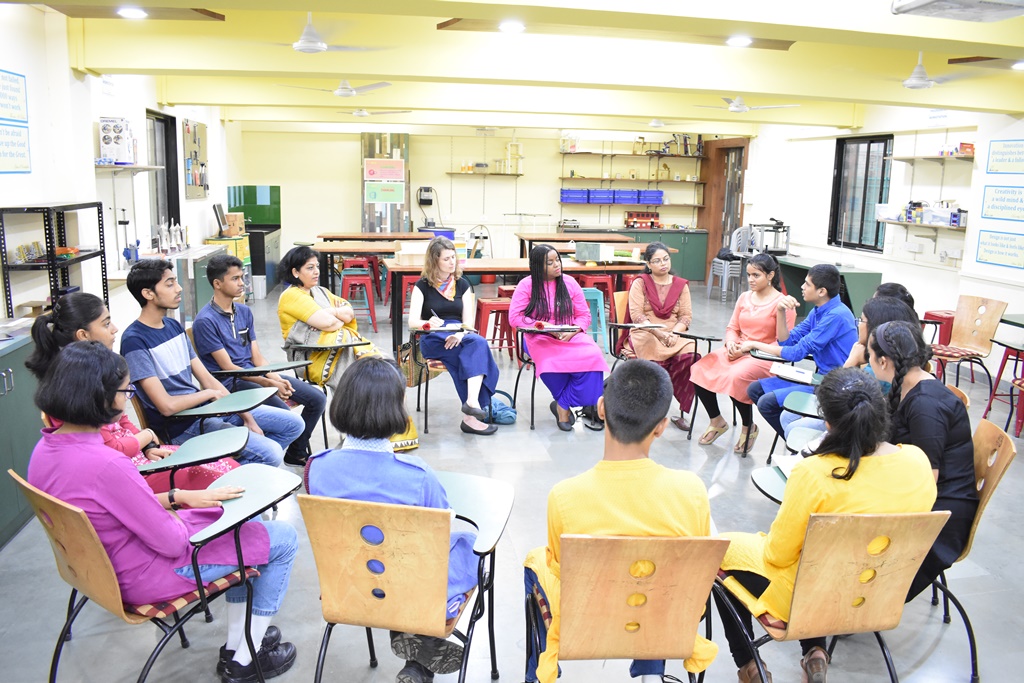
Dr. Kalmadi Shamarao High School, a private school in Pune. This Tinkering Lab is a space for discussions, innovating, and working together collectively. 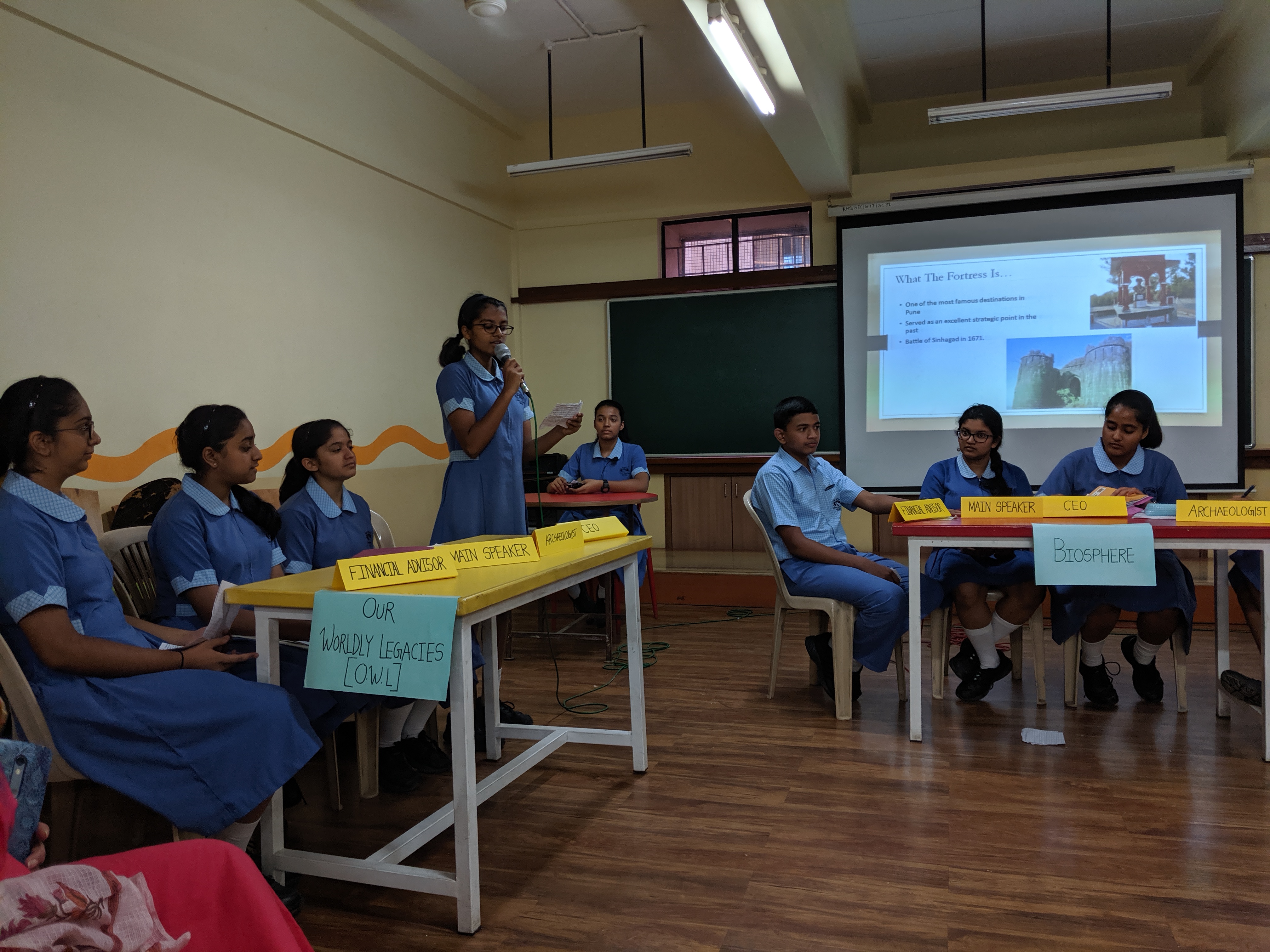
This group of 10th grade students spent a couple weeks preparing for a mock parliament debate. They worked together to do internet research, visited heritage sites to gather more information, and demonstrated some serious critical thinking skills. 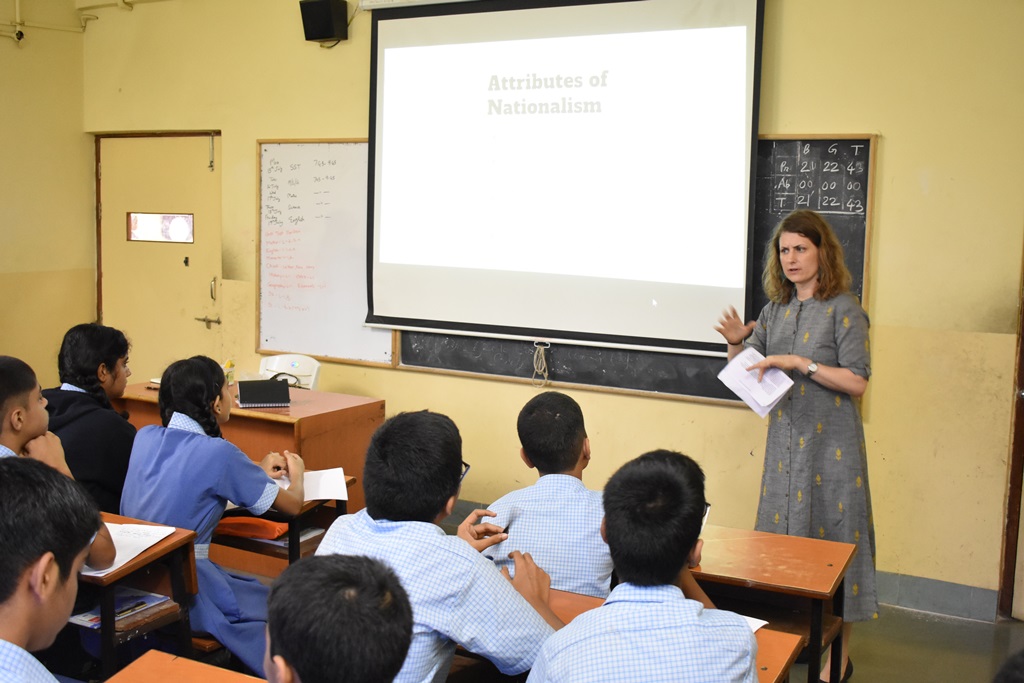
A 10th grade history class that I co-taught today. While cramped by the standards I’m used to, students were still able to use the space to work together in groups. 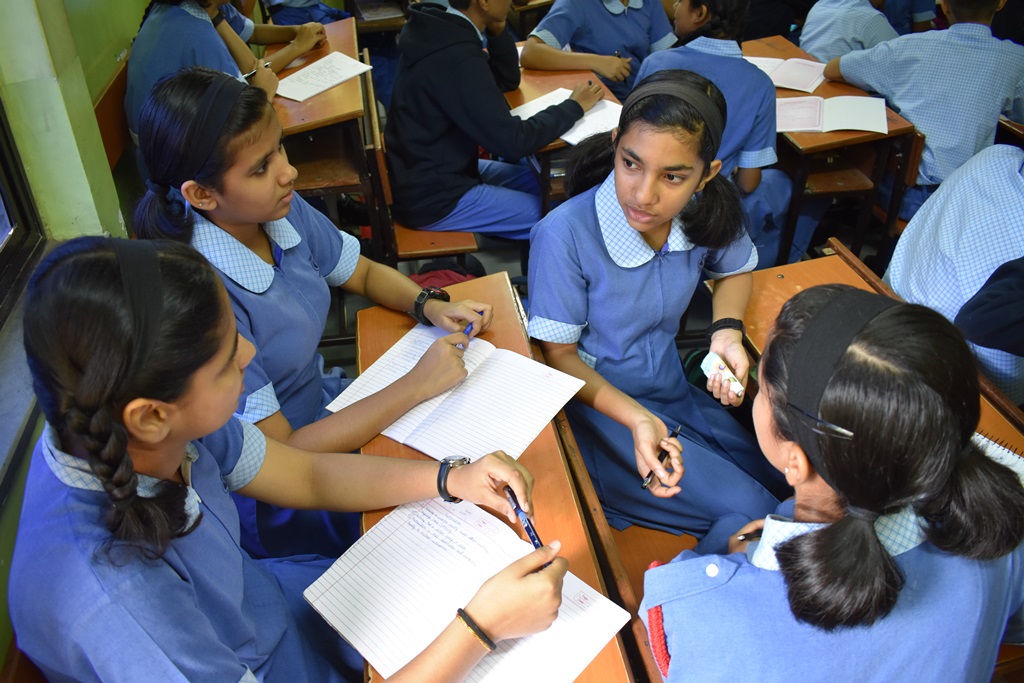
Students discussing differences between patriotism and nationalism.
KHS
It is likely no surprise that there are discrepancies between private and government (public) schools in India. Anyone familiar with education understands that a basic, but important, difference between a private school and a public one is that students pay fees to attend private schools while they don’t to attend public schools. This week in Pune, we are spending most of our time at our host school, KHS, which is part of a network of private schools managed by a governing board. The school has a long track record of high test scores, professionally and economically successful graduates, and opportunities for students to think critically and work collaboratively with their peers. The school draws mostly on middle/middle-upper income students and the vast majority of these students are Hindu (though, this isn’t something that anyone would offer up, necessarily — I just asked). Similar to the United States, private schools have more autonomy, though here in India they generally follow the same schedule in terms of holidays and vacations and exam times. Also similar, private schools tend to be regarded more highly, though there are exceptions where we see government schools that have a niche or a funding source that enables them to be more competitive (we visited a school like this in Delhi). Class sizes, while still big by American standards, are generally smaller than in public schools, and private schools tend to be more highly resourced with technology and electives and other programs (the ThinQ curriculum, a gifted and talented program, a Tinkering Lab, etc.) In fact, one person told us that in Pune (and I imagine this extends to other metropolitan areas in the country, too) nearly 80% of students go to private schools. This is a difference between India and the U.S., and says a lot about how despite major differences in elite private schools and public schools in the U.S., the U.S. public education system in general is serving more students and is, on the whole, more functional.
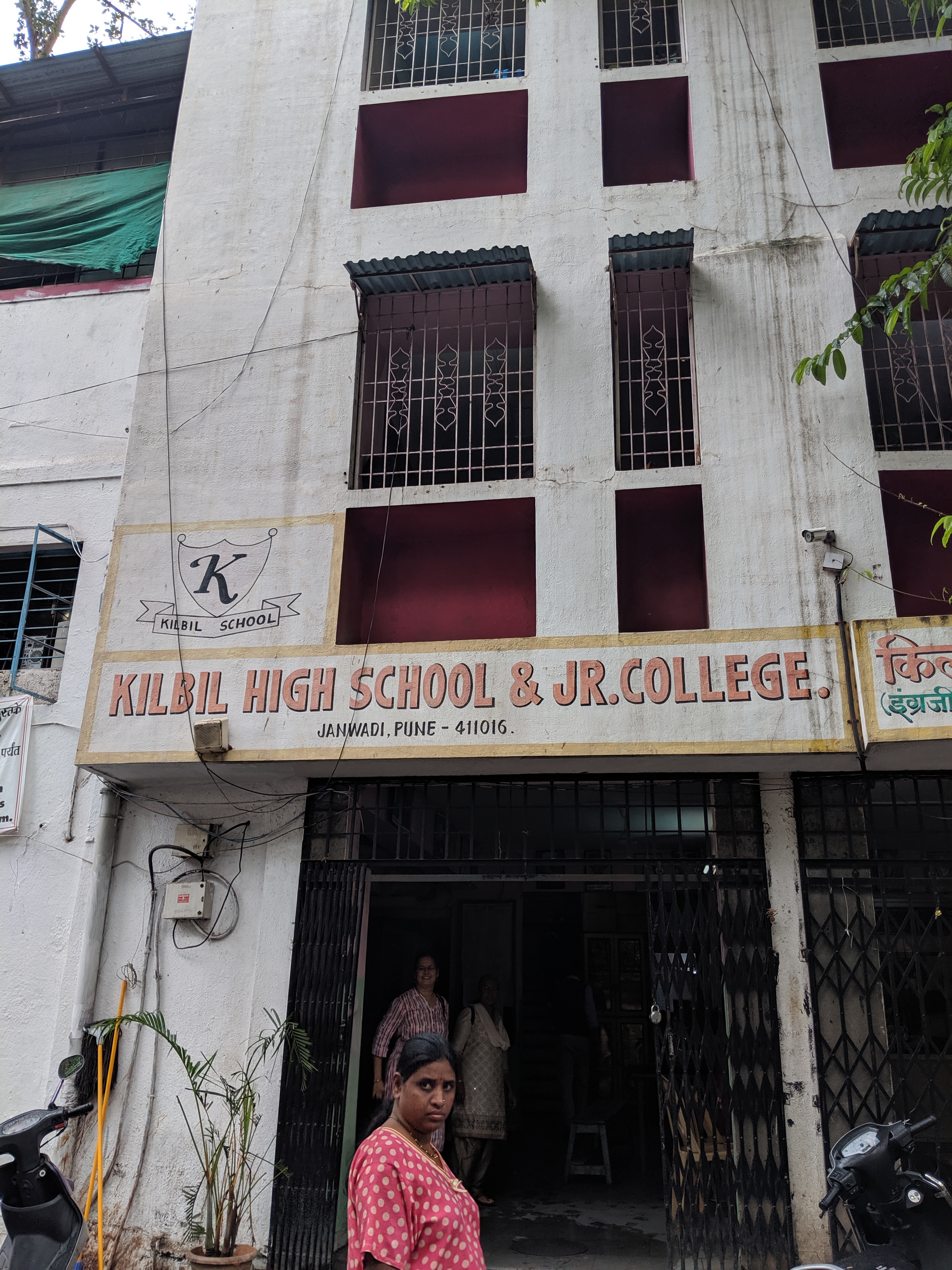
Kilbil HS is an “aided school” where 70% of the students attend for free and 30% pay nominal fees. 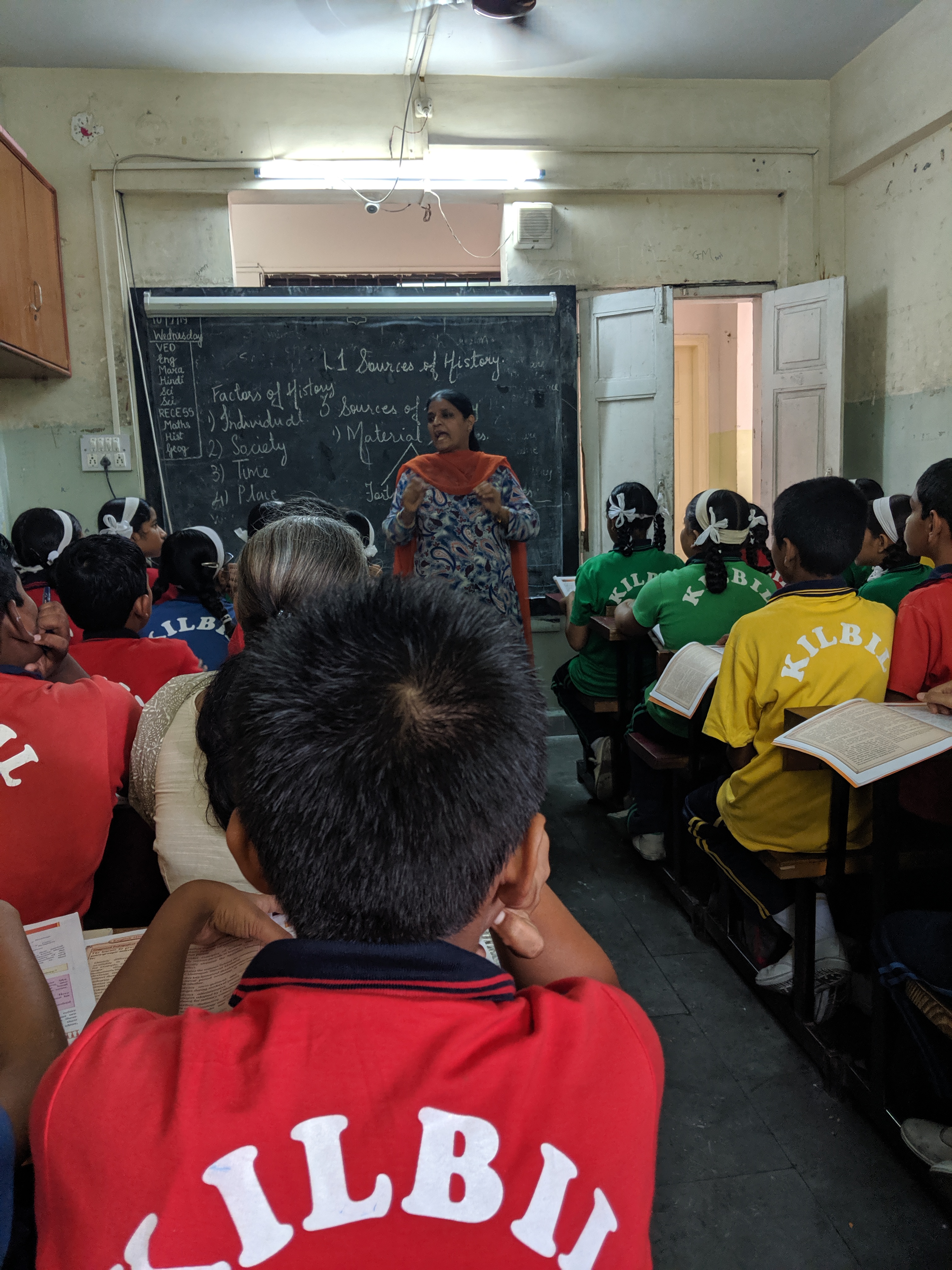
This is a history class, where the 7th graders were learning about the features of history. 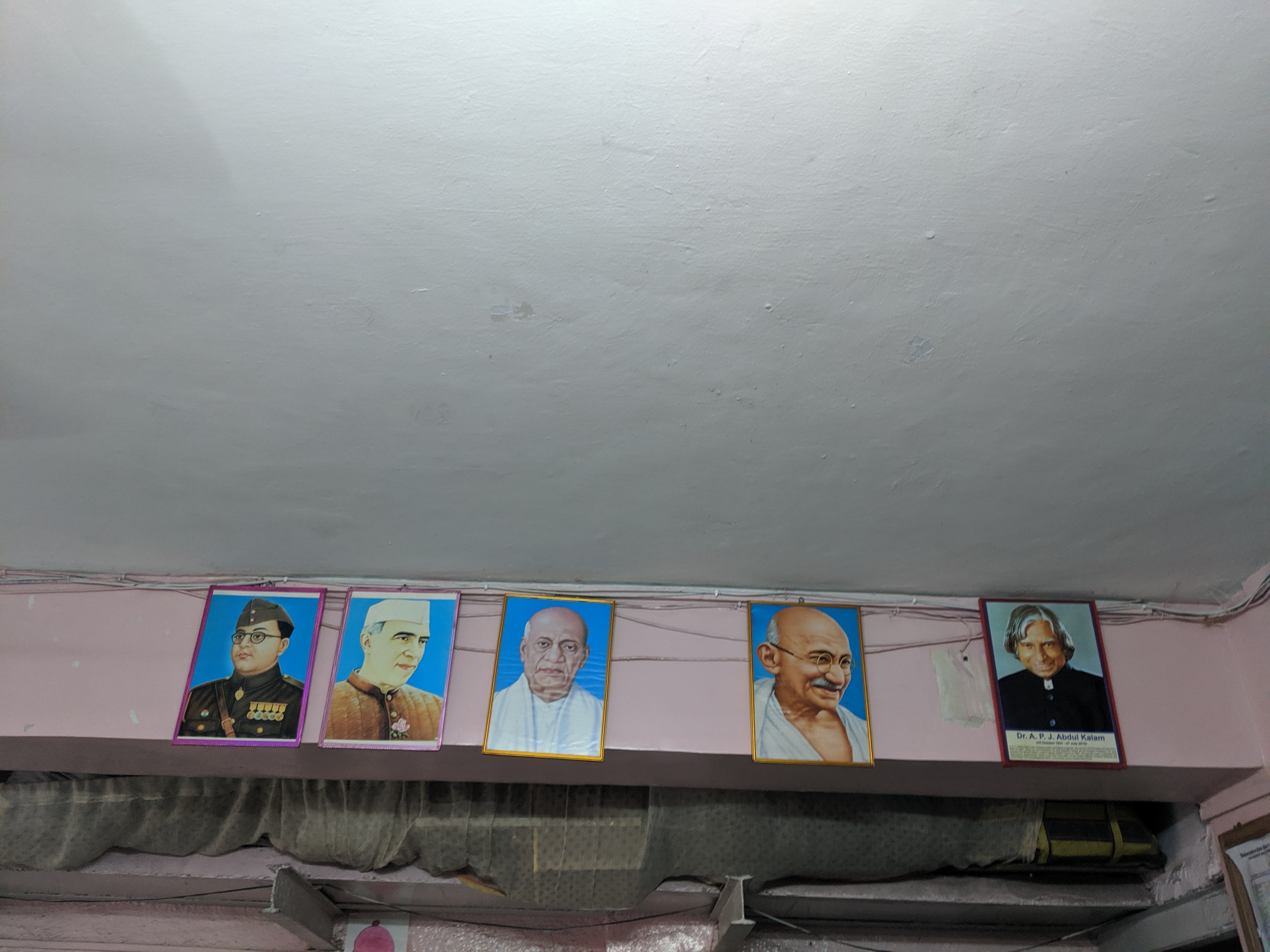
Some Indians who are honored and respected. There were two more walls, which included at least three women, one of whom was active in resisting the British in the 1857 Rebellion. I teach this to my students, but had no idea who she was. I will add her to the curriculum! 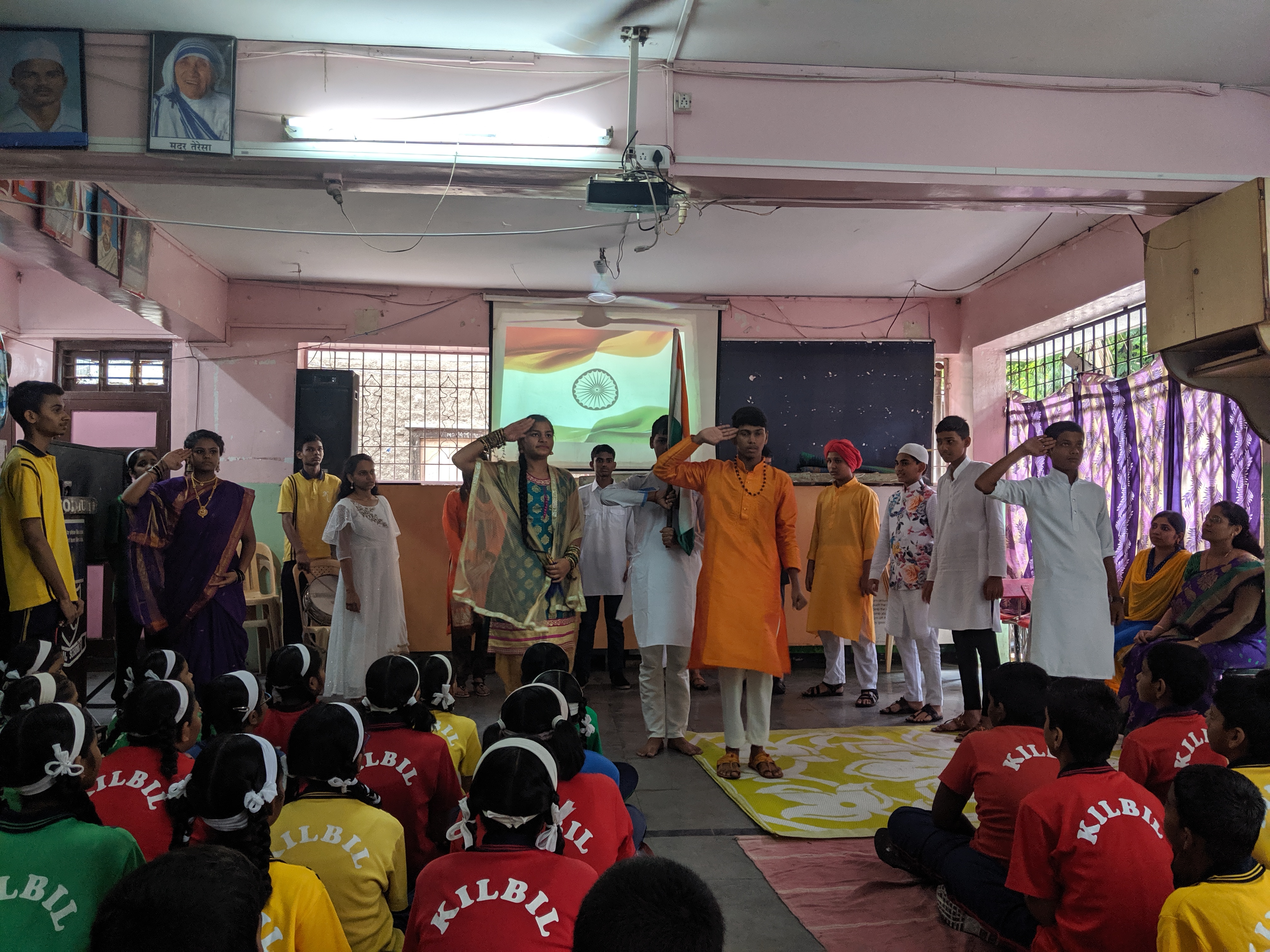
A presentation by 9/10th grade students about religious diversity in India. They acted out and educated us about Hinduism, Islam, Christianity, and Sikhism.
Kilbil High School
Today we had the opportunity to visit a public school in a different part of Pune. This school has about 1800 students, K-10, and serves mostly low income students. We really enjoyed speaking with a group of students who asked fun questions like, “Does it snow where you live? Are the pineapples really tasty in Hawaii? (Davie teaches in Hawaii.) What is your native tongue?” We also enjoyed a presentation by some older students about India’s “culture.” Not surprisingly, their presentation focused on India’s “secularism” a.k.a. India’s religious diversity. If there is anything I’m taking from this trip, it is that everyone I’ve met and talked with takes pride in this pluralism. What is also interesting is that many of the people whom I’ve talked with about religion, most of them Hindu, have maintained that issues between religious groups are overstated. This in spite of the rise of the BJP (India’s leading party and one that is regarded by many, including the Prime Minister himself, as a Hindu-nationalist party). I think that conflict between religious groups in India, namely Muslims and Hindus, is probably less frequent than we might believe from news reports, but I couldn’t help but notice that Kilbil has far more Muslim students and teachers, which seems to underline the persistent systemic inequities between communities in India that often track along religious lines, though not exclusively. There is class and caste and urban v rural too, but that is a story for another day. Feel free to ask me about it–I had some interesting conversations that I’m too tired to write about right now!
Anyway, back to Kilbil Public School and the differences we noticed between it and KHS, just a few miles away. Kilbil is more cramped, it is a little rougher around the edges, the classrooms are smaller, and the set up less conducive to student-centered learning. Students with learning disabilities generally learn in a separate classroom, though the teachers we asked did say that the goal is to include them in the general education classes eventually. Still, the bigger takeaway for me was that the staff was equally as committed to teaching as the staff at KHS. Teachers were generous with their time with us and we had excellent conversations about how schools are funded in the U.S., how we teach history and emphasize multiple perspectives, and how it is difficult to ensure that students who come from family backgrounds where resources are scarce get what they need. If anything, these conversations felt more meaty and intimate than others we’ve had and I would have loved to have spent more time in classrooms and talking with kids. Both schools are doing their level best to educate the students in front of them, and what we all believe needs more attention–both here and in the U.S.–is a shift in government policies around school funding, a shift in mindset that would regard teaching as a more highly respected profession, and the need to provide support for students outside of school to enable all students to live and operate in circumstances that allow them to thrive.
 Ms. Otty in India